Lichens: The Strange Little Ecosystems Living on Your Trees

If you’ve ever looked at a tree trunk and noticed patches of gray, green, blue, or even pale yellow growing across the bark, you may have wondered if the tree was sick.
Good news — in most cases, those strange crusty growths are lichens, and they’re usually completely harmless.
In fact, lichens are some of the most fascinating organisms in nature because they aren’t actually a single organism at all. They’re more like a tiny living partnership.

A lichen is formed when a fungus teams up with algae — and sometimes cyanobacteria — to create a mutually beneficial relationship. Think of it as nature’s version of roommates splitting the bills.
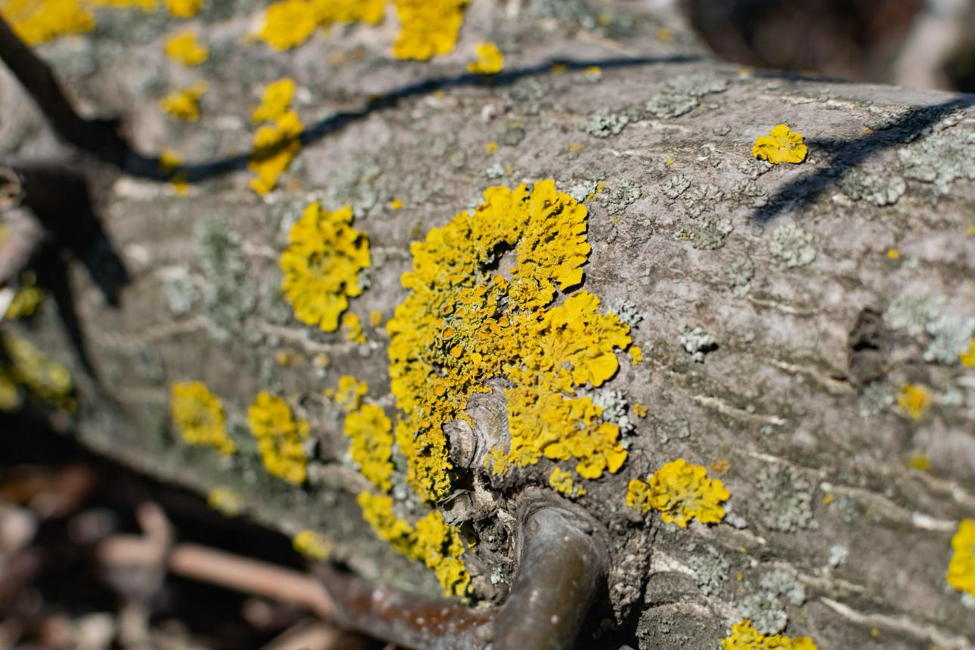
The fungus provides structure, protection, and a place to live, while the algae use sunlight to produce food through photosynthesis. Together, they form the colorful, textured growths we see attached to bark, rocks, fences, and even old rooftops.
And despite what many people assume, lichens do not feed on trees.
They aren’t parasites, they don’t invade the wood, and they don’t steal nutrients from the tree. They simply use the bark as a surface to grow on — basically renting space without paying utilities.

One of the coolest things about lichens is that they absorb moisture and nutrients directly from the air instead of through roots. Because of this, they are extremely sensitive to pollution and environmental changes. In fact, scientists often use lichen populations as natural air-quality indicators.
Healthy lichen growth usually means the surrounding air is relatively clean.
Lichens are especially common on mature trees in humid environments with filtered sunlight and slower branch growth. Sometimes heavy lichen growth may appear on trees with thinning canopies because increased sunlight reaches the inner branches more easily. But the lichen itself is usually not the cause of the decline — it’s simply taking advantage of the changing conditions.
Nature loves opportunities.
Lichens also come in an incredible variety of shapes and textures. Some appear leafy, others crust-like, and some look almost like tiny shrubs growing on the bark. They can survive extreme heat, freezing temperatures, drought, and surprisingly harsh environments.

In many ways, lichens are miniature ecosystems quietly living on the surface of your trees.
So the next time you spot lichens covering a branch or trunk, don’t panic. Your tree is likely just hosting one of nature’s oldest and most fascinating partnerships — a tiny world of fungi and algae working together high above the forest floor.
This article is highly visual, so adding images throughout will significantly increase reader engagement. Lichens come in incredible colors and textures, making them perfect for educational tree care content.

Comments